
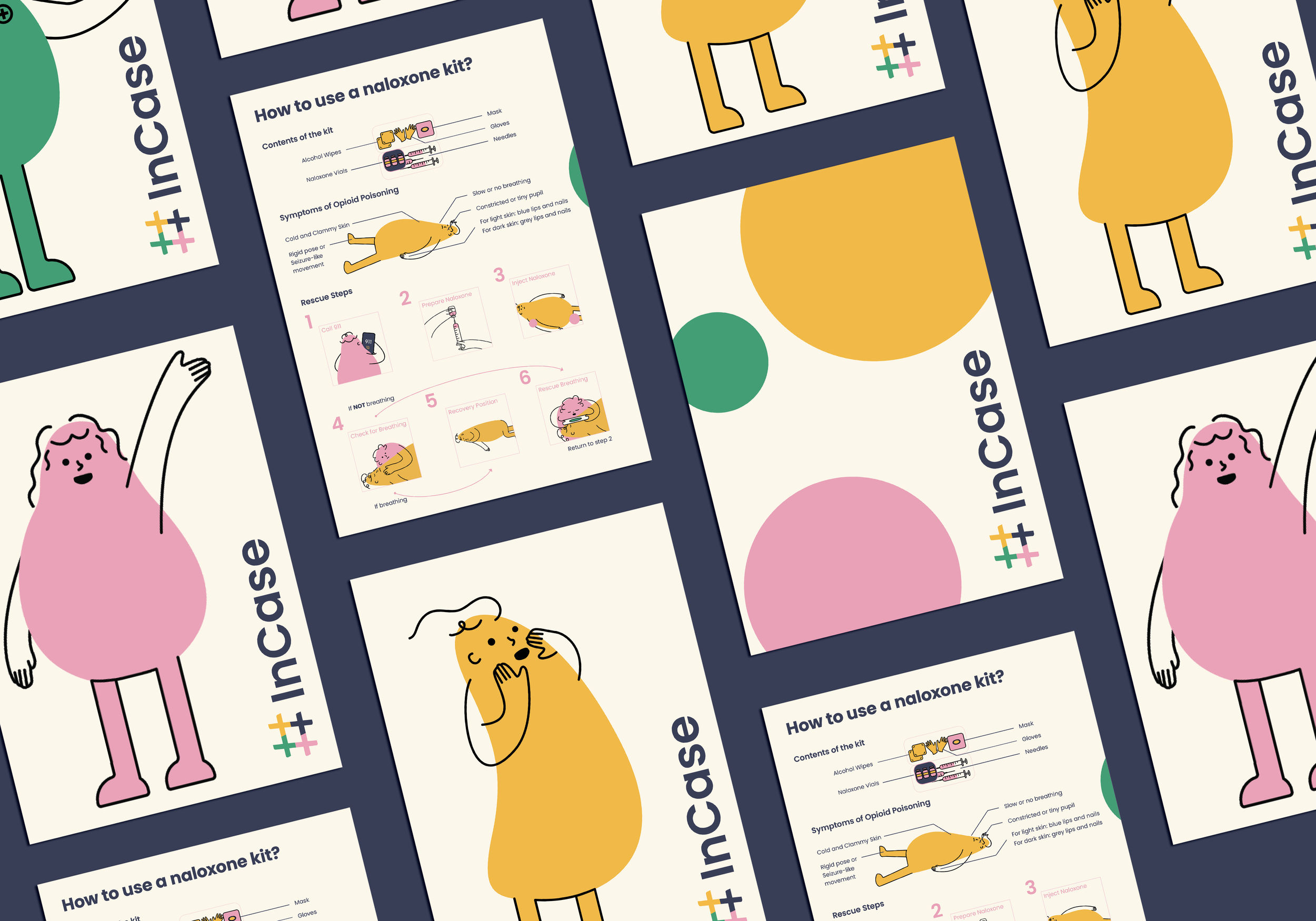
Design Research for Overdose Education
Keywords: information design, emergency, public health, visual communication design, visual analysis, human centred design, co-design
CONTEXT
The project explains opioid poisoning and response through effective information design. In emergency situations, critical information must be presented clearly and accessibly so that it can be quickly acted upon. Drug use is increasingly stigmatised and critical health information is not made accessible for people with low literacy, lower socioeconomic status, or English as a second language. Well-designed materials can empower ordinary people to perform life-saving interventions and feel confident doing so. The project aims to create a universal information design response for opioid poisonings field guide that addresses issues related to risk management, stigmatisation, representation, and visual communication.
This project highlights the importance of clarity in messaging on emergency procedures related to overdose, and technical training on injection procedures for three main audiences: (1) first aiders and medical professionals; (2) people familiar with drugs or drug overdoses; and (3) community members with no training.
To read more: see the project website: www. droe.ca
Gillian Harvey (University of Alberta), PI
Dr. Kate Sellen, (University of Waterloo and OCADU), Co-PI
Dr. Stephanie Vandenberg (University of Calgary)
Dr Elaine Hyshka (University of Alberta)
Maryam Mallakin, OCADU
RAs: Mehrnoush Zeidebadi, Carlos Jarquin, Simone Halliday-Shaw, Hannah Walsh, Rachel Schuck, Sneha Pooranalingam, Shirley Yang
PROJECT TEAM
FUNDERS